
Taharqa: The Nubian Pharaoh Who Ruled the Nile
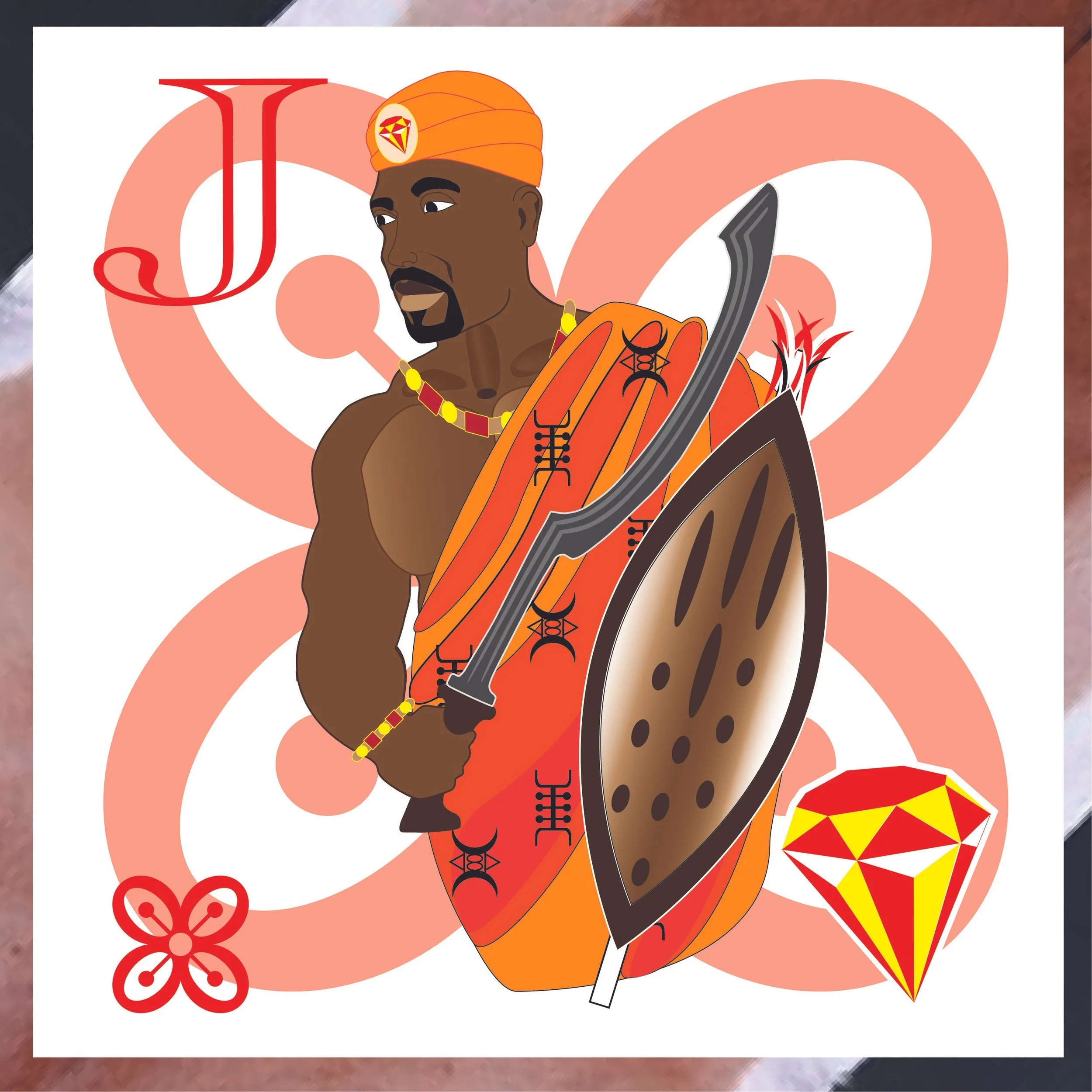
The Jack of Diamonds
Taharqa: The Nubian Pharaoh Who Ruled the Nile
In an age when empires rose and fell like the floodwaters of the Nile, one man stood astride both Egypt and Nubia — a warrior, a builder, a king chosen by the gods. His name was Taharqa, Pharaoh of the Twenty-Fifth Dynasty of Egypt, King of Kush, and ruler of one of the most dazzling empires the ancient world had ever known.
Born a prince of Nubia around 710 BC, Taharqa was the son of Piye, the legendary Kushite conqueror who first united Egypt under Nubian rule. Raised in the shadow of the pyramids and the sacred mountains of Napata, young Taharqa was destined for greatness — though his path to power was anything but smooth.
When his beloved cousin Shebitku brought him north to Egypt, Taharqa saw the fading temples of the gods and vowed to restore their glory. Years later, when the falcon of kingship “flew to heaven,” he took the double crown of Upper and Lower Egypt, proclaiming himself Pharaoh — “Nefertem is my protector.”
He was barely thirty years old.
The Age of Gold
Taharqa’s reign — from 690 to 664 BC — was an era of breathtaking revival. Under his rule, Egypt and Nubia flourished together in a golden age of art, architecture, and faith. He restored the great temples of Amun at Karnak, built shrines to the gods at Jebel Barkal and Kawa, and raised monumental pyramids along the Nile.
His empire stretched farther than it had since the days of Ramses the Great — from the Mediterranean Sea to the heart of Africa. Trade flowed freely through the deserts; gold gleamed from Kushite mines; and priests once again sang hymns to the gods of both Thebes and Napata.
Taharqa himself gave lavish offerings to Amun, filling temple treasuries with gold and incense. He saw himself not only as Pharaoh, but as the living bridge between Egypt and Nubia — two lands, one soul. The double cobra on his crown told the story: the king of two worlds.
The Warrior King
But even as the temples rose, dark clouds gathered from the east. The Assyrian Empire — fierce and relentless — had begun to march west, swallowing kingdoms from Babylon to Jerusalem. Taharqa would not bow.
He allied with King Hezekiah of Judah, sending his armies north to defend Jerusalem against the Assyrian warlord Sennacherib. Ancient texts tell that the invaders suddenly fled — struck by plague or by fear. The Bible names the deliverer: “Tirhakah, King of Ethiopia.”
The legend of Taharqa the Savior spread far and wide.
But the Assyrians would return. In 674 BC, King Esarhaddon invaded Egypt itself — and Taharqa met him head-on. Against all odds, the Nubian Pharaoh crushed the invaders, driving them back across the desert. For a moment, it seemed the gods themselves fought at his side.
Then came the second invasion.
By 671 BC, the Assyrians returned in overwhelming force, storming into Memphis and capturing Taharqa’s royal family. Still he refused to yield. He retreated south, regrouped, and struck again, retaking Memphis just three years later. His resilience became legend — the Pharaoh who would not fall.
Yet the tide of empire is merciless. The Assyrians returned once more, and this time they burned Thebes. Taharqa was forced to withdraw to Nubia, where he continued to rule in dignity and defiance until his death in 664 BC.
The Eternal King
In death, Taharqa sought peace not in Egypt, but in his homeland of Nubia. On the windswept plains of Nuri, he built a pyramid of staggering size — the first of its kind in centuries, rising from the sand like a golden flame. Within it lay over a thousand shabtis, tiny statues meant to serve their master in the afterlife.
Even the ruins of his monuments still radiate power. In Karnak, his massive columns bear his name. At Jebel Barkal, he stands carved in stone beside the ram-headed god Amun. In the Ashmolean Museum, a shrine shows him offering bread to the gods — his calm, commanding face framed by the twin serpents of kingship.
The Greeks called him Tearco the Aethiopian, a conqueror who, they said, “marched as far as Europe.” The Bible remembered him as a savior. Historians remember him as a bridge — between Egypt and Africa, between ancient faith and enduring pride.
The Legacy of Taharqa
Today, more than 2,600 years later, the name Taharqa still carries thunder. He was the builder of empires, the defender of faith, the “Nubian Pharaoh” who ruled two lands and defied the might of Assyria.
His reign was not just a chapter in Egyptian history — it was a renaissance, a moment when the heart of Africa beat at the center of the world.
Beneath the Nubian sun, his pyramid still watches over the desert. The sands shift, the centuries pass — but the spirit of Taharqa endures, eternal as the Nile.
The Jack of Diamonds holds a Khopesh. The Adinkra symbol in the background is Abundance (Bese Saka.)