
The King of Diamonds
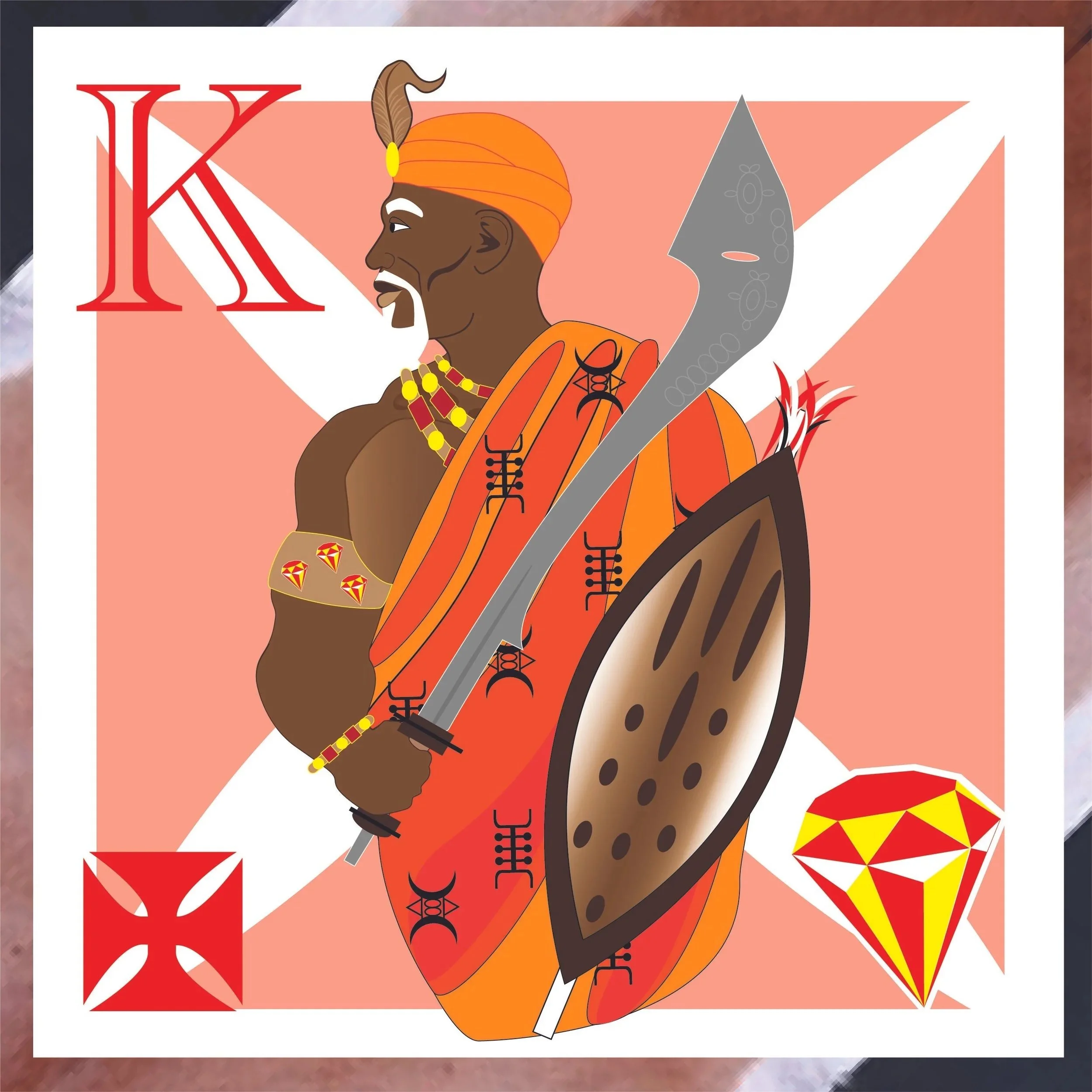
Mansa Musa: The King of Legend
Mansa Musa: The King of Legend
The Emperor Who Turned Gold into Glory
The desert shimmered beneath a sky of molten light. Across the endless dunes, a procession moved — an ocean of silk and gold, camels laden with treasure, drums echoing through the sand. At its heart rode a man whose very name would glitter through eternity.
Mansa Musa.
King of Kings. Lord of the River and the Sands. The man who made the world gasp in wonder.
The Rise of the Golden Empire
He was born into a dynasty of conquerors — heirs to the mighty Sunjata Keita, founders of the Mali Empire. But when Mansa Musa ascended the throne around 1312, his vision stretched far beyond conquest. He inherited an empire that gleamed like the dawn — its rivers rich with trade, its earth veined with gold. From Bambuk to Bure, from Timbuktu to Gao, the lifeblood of the Sahara flowed through Mali. Gold, salt, ivory, silk — the treasures of continents passed through his hands. Under his reign, Mali became the beating heart of the world’s wealth — a kingdom where even dust shone like diamonds.
The Pilgrimage of Legends
Then, one year, the world trembled with rumor. The King of Mali, it was said, was going on Hajj — the sacred pilgrimage to Mecca. But this would not be a journey of humility. It would be a spectacle of divine power.
Across 2,700 miles of desert, Mansa Musa led a procession the likes of which history had never seen. Sixty thousand men marched under his banner. Twelve thousand slaves, each draped in fine brocade and Yemeni silk, carried staffs of solid gold. Eighty camels bore over eighteen tons of gold dust — enough to gild the earth itself. They moved like a moving sunrise — a river of gold winding through the sands. And wherever they passed, the world bent to look.
Cairo: The City That Glimmered Too Bright
When the caravan reached Cairo, its splendor silenced even the proud Mamluk Sultan. For three months, Musa’s generosity transformed the city. He gave gold to beggars, gifts to merchants, endowments to scholars.
He built mosques each Friday as he passed through. But his giving was so immense, so lavish, that the price of gold collapsed across Egypt — the metal of gods devalued by the hand of a man. Historians would later write that Mansa Musa had single-handedly altered the global economy. But in that moment, Cairo simply shimmered — intoxicated by the wealth of a king who saw generosity as his throne.
The Return of the Golden Emperor
After Mecca, he returned not as pilgrim, but as legend. His journey had lit the desert on fire; his name was now carried on the wind from the Atlantic to the Red Sea. He brought with him architects from Andalusia, scholars from Cairo, and poets from the East — men who would reshape the cities of Mali into jewels of the Sahel.
In Timbuktu, he built the Djinguereber Mosque, its walls of sand and clay glowing like amber under the sun. He founded the University of Sankoré, where astronomers, jurists, and philosophers gathered beneath domes of gold to debate the cosmos. Under Mansa Musa, Timbuktu became the Athens of Africa — a city of light where trade met intellect, and faith met eternity.
The King of the World’s Imagination
Even across the sea, in Europe, his name became myth. On the Catalan Atlas of 1375, mapmakers drew him with a golden crown and orb, a black emperor whose wealth and wisdom eclipsed that of kings.
They called him “Mousse Melly, Lord of the Blacks of Guinea.” And beneath his image, they wrote: “This king is the richest and noblest of all these lands, for gold is found in his country in abundance.” He was no longer merely a ruler of Mali. He had become a symbol of civilization itself — proof that Africa’s heart beat with power, elegance, and enlightenment.
The Empire of Light
Under Musa’s hand, Mali rose to its zenith — stretching from the Atlantic coast to the Niger River, its cities humming with merchants, scholars, and artisans. Gold flowed like blood through its veins; caravans crossed its deserts like stars across the night. But Mansa Musa’s true gift was not gold — it was vision. He understood that wealth fades, but wisdom endures. So he built an empire not just of riches, but of knowledge, faith, and culture. He made the desert bloom with thought. The Legacy of Mansa Musa.
When Mansa Musa died — sometime around 1337 — he left behind not just an empire, but a legend that would outlast kingdoms. His name became synonymous with wealth, generosity, and divine ambition. Even now, the sands of Mali still glimmer faintly with the echo of his reign. Every grain carries a trace of gold, every whisper carries a name: Mansa Musa
The man who turned faith into spectacle. The man who made gold sing. The man who taught the world that true power is not in what one possesses, but in what one creates. Where gold became legend. Where faith became empire. Where Africa ruled the world in light.
Mansa Musa: The King of Diamonds
The King of Diamonds holds an Ada or Omozo sword. The Adinkra symbol in the background is Good Fortune [Krapa (Musuyidee).]