

The Jack of Hearts
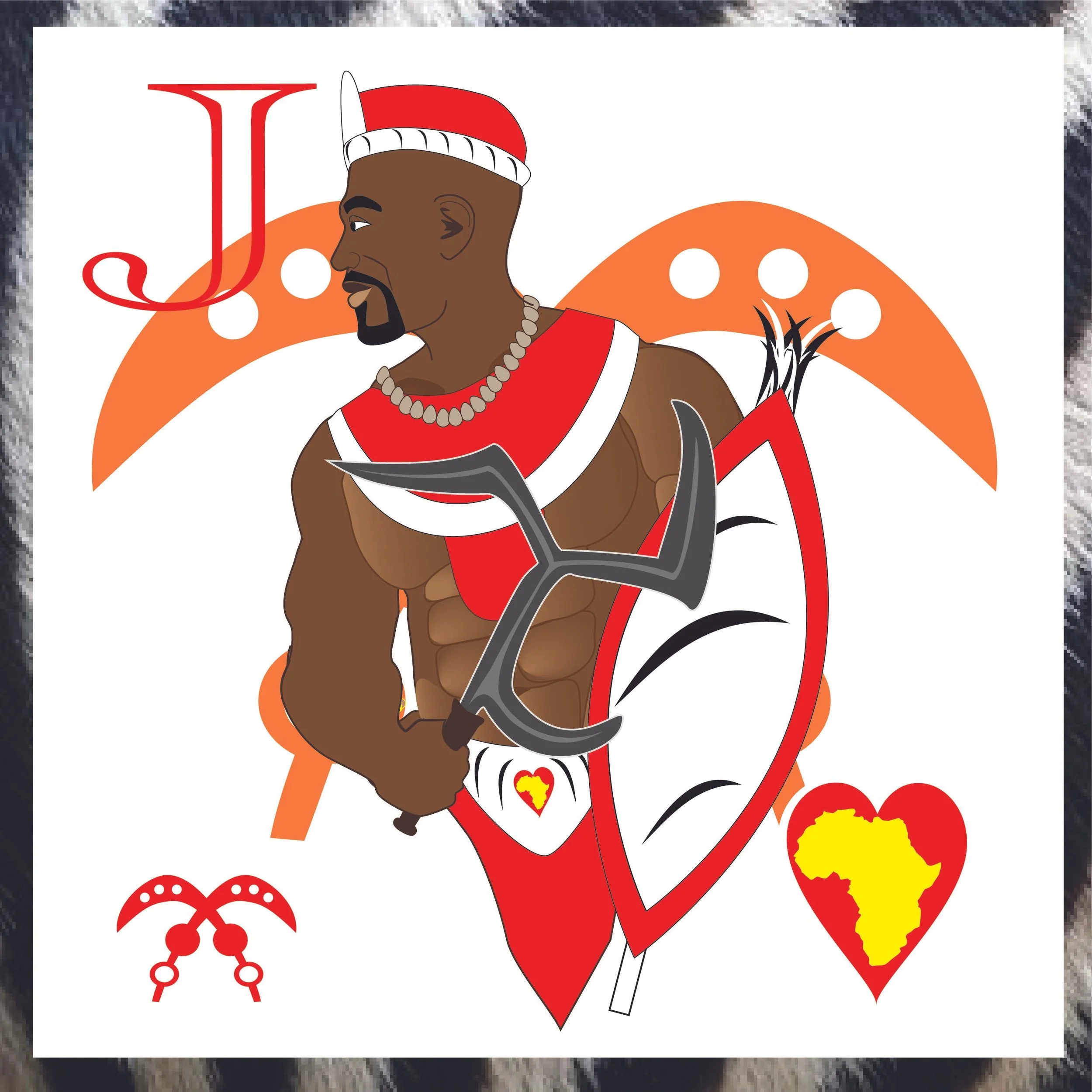
Hendrik Witbooi
The Rebel Who Fought an Empire
Hendrik Witbooi: The Rebel Who Fought an Empire
In the blazing heart of southern Africa, when the world was being carved up by foreign powers, one man dared to defy an empire. His name was Hendrik Witbooi — warrior, visionary, and the first African leader to take up arms against German colonial rule.
Born around 1830 in Pella, in today’s Northern Cape, Witbooi came from a proud line of Nama chiefs. His grandfather, David Witbooi, had led his people across the Orange River into Namaland. His father, Moses Witbooi, ruled before him. But Hendrik was different — educated by Lutheran missionaries, fluent in several languages, and deeply spiritual. He believed his destiny came not from bloodline, but from a vision.
After surviving a brutal conflict with the Herero, Witbooi claimed that God Himself had spoken to him — commanding him to lead his people north, to freedom. Against his father’s wishes, he did exactly that. On May 16, 1884, he led a faction of the ǀKhowesin tribe into the wilds of central Namibia, driven by faith, fire, and the dream of unity.
He was a warrior with a pen as sharp as his sword. In his journals — now preserved by UNESCO — he recorded not only the battles, but his prayers, doubts, and unshakable conviction that his people’s struggle was a divine mission.
By 1888, Witbooi had defeated rival chiefs and united many Nama groups under his command. He signed his letters “Chief of Great Namaqualand,” a title that struck fear and pride across the land. But greater storms were coming.
At dawn on April 12, 1893, the German colonial army attacked Witbooi’s village at Hornkranz without warning. Bullets ripped through the dawn; women and children were killed. Witbooi escaped the massacre, vowing never again to submit. For two years he fought a guerrilla war from the desert plains, outnumbered but never outmatched.
When his people were battered and starving, he signed a conditional peace treaty with the Germans in 1894 — but his fight was far from over. A decade later, as the German Empire turned its guns on the Herero, Witbooi’s conscience would not let him stand aside. On October 3, 1904, he rose again, rallying the Nama to resist.
Old but unbroken, he led from the front — rifle in hand, faith in his heart. His final battle came on October 29, 1905, near Vaalgras. Surrounded and wounded, the seventy-five-year-old chief whispered his last command:
“It is enough. The children should now have rest.”
Hendrik Witbooi died fighting for freedom — not just for his people, but for a nation yet to be born.
Gracing the face of currency
Today, his spirit lives on in Namibia, where his face adorns the 50-, 100-, and 200-dollar notes. His name marks schools, streets, and the towering Heroes’ Acre outside Windhoek, where a granite monument honors his courage. His writings — the Witbooi Papers — remain a testament to intellect, faith, and defiance.
As Namibia’s founding president Sam Nujoma said at the monument’s unveiling:
“Kaptein Hendrik Witbooi was the first African leader to take up arms against the German imperialists... To his revolutionary spirit and his visionary memory, we offer our honour and respect.”
From the sands of the Kalahari to the halls of history, Hendrik Witbooi’s voice still echoes — fierce, fearless, and free.
The Jack of Hearts holds a Kpinga. The Adinkra symbol in the background is Courage (Akofena.)