
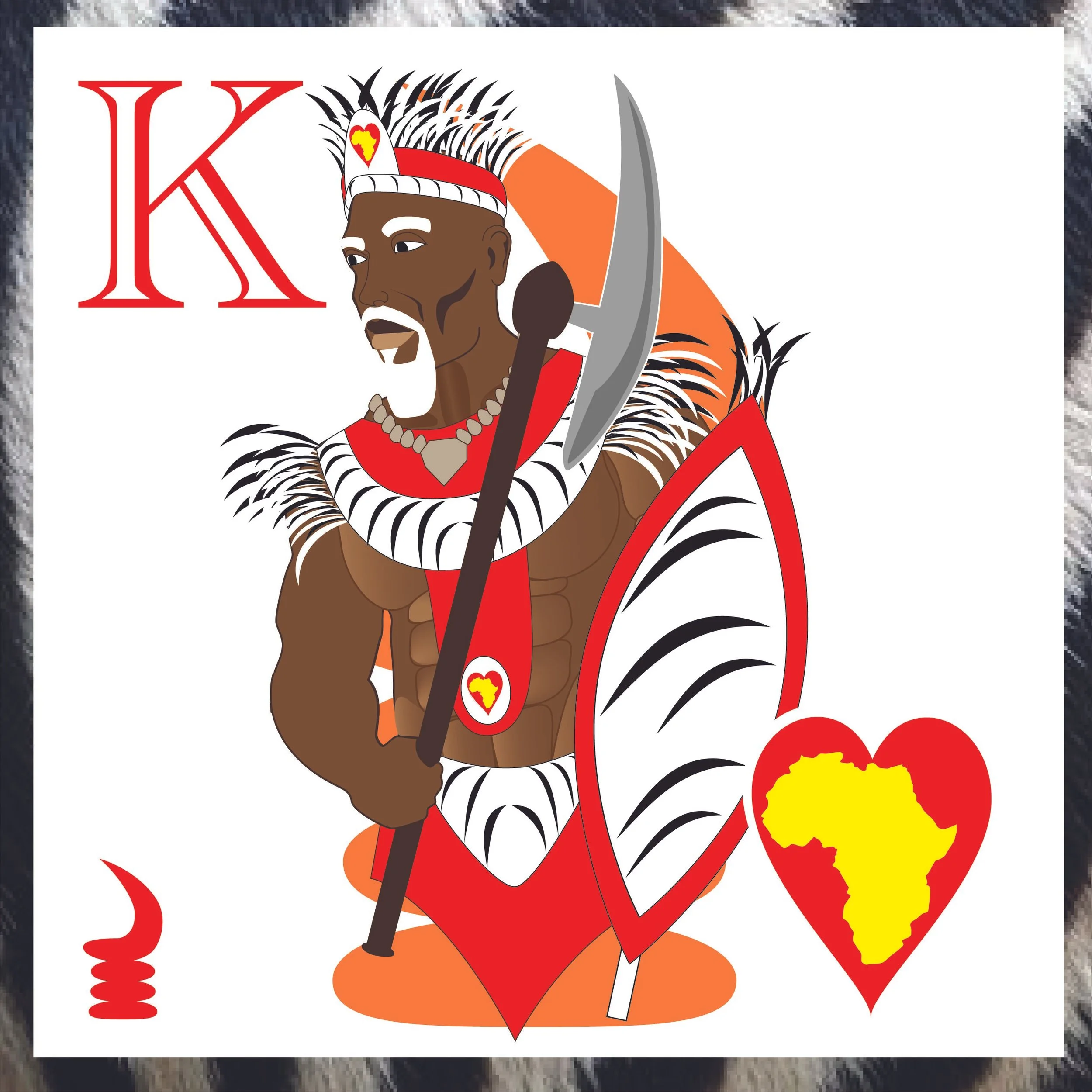
King of Hearts
Khufu: The Heart of the Pyramid
The King Who Commanded Eternity
Khufu: The Heart of the Pyramid
The King Who Commanded Eternity
The desert holds its breath. The dawn bleeds gold across a horizon of sand and silence. And in that silence — something stirs. From the shifting dunes, a single monument rises like the first thought of the gods: a mountain carved by human hands, its peak once crowned in gold. At its base, whispers still echo — the name of the king who dreamed the impossible and made it stone. Khufu. The Builder of Forever.
The Birth of Majesty
Long before his name became legend, Khufu was a prince of promise — the son of Sneferu, the pioneer of the pyramids, and Hetepheres, queen of grace and divine blood. But the young Khufu was not content to inherit greatness. He meant to outshine it. They said he was chosen by Khnum, god of creation — his very name, Khnum-Khufu, meant “Khnum Protects Me.” And perhaps the god did, for in Khufu burned a fire that could not be contained — a fire that would forge stone into eternity.
The Dream of the Horizon
When Khufu ascended the throne around 2589 BC, Egypt was already a kingdom of splendor — temples rising like prayers, tombs glimmering with gold. Yet, to Khufu, even the heavens felt too small. He dreamed not of a monument to death, but of a horizon where the human touched the divine. He called it Akhet-Khufu — The Horizon of Khufu. And from this vision, a miracle was born: the Great Pyramid of Giza.
Imagine it as it once was — its faces sheathed in white limestone that shimmered like sunlight solidified, its summit plated in electrum, blazing gold against the sky. When dawn struck its crown, the pyramid did not reflect light — it became light. A monument not merely to a king, but to the idea of forever.
The Builders of Forever
Across Egypt, the call went out. From the quarries of Tura to the copper mines of Sinai, from the cedar forests of Byblos to the riverbanks of the Nile, a nation moved as one heartbeat. Thousands of craftsmen, engineers, scribes, and sailors came to serve the dream. They hauled limestone and granite, measured the heavens, and carved each block with reverence. At the port of Wadi al-Jarf, Khufu’s ships set sail — carrying the stones that would lift his soul toward the sun. The papyrus diaries found there — the oldest ever written — still whisper of their task: "Delivering white stone from Tura for the Great Pyramid of Khufu."
Every hand that touched those stones became part of a greater body — the living machine of eternity.
The King and the Gods
To his people, Khufu was more than mortal. He was Horus in flesh, the falcon who ruled both sky and earth. His royal names spoke not of conquest, but of divinity: “He Who Crushes for Horus.” “The Twice Golden Falcon.” He ruled with a gaze that cut through the veil of men and gods alike. He closed temples not in cruelty, but in command — reminding the priests that the source of all creation was not in their hands, but in his. Some called him tyrant. Others, visionary. But all agreed on one truth: Khufu’s will bent even eternity to its knees.
The Pyramid: A Symphony of Stone
At Giza, the sands themselves bowed to his design. Each block of limestone was set with precision to align with the stars. The corridors, chambers, and shafts were not mere architecture — they were cosmic geometry, aligning heaven and earth in perfect symmetry. At the heart of the pyramid lies the King’s Chamber, a sanctuary of red granite, polished to mirror the soul. Above it, a series of vaulted stones distribute the weight of eternity — a design so flawless that even modern engineers marvel at its silence. When the pyramid was complete, it stood 481 feet tall — a mountain of divine mathematics. And when the sun set over the Nile, its face burned crimson, as if the very blood of Khufu had fused with the sky.
The Whisper of Immortality
Centuries passed. Empires fell. Sand devoured stone. But the name Khufu endured — carved into the bones of the earth. The Greeks would call him Cheops and weave tales of tyranny. The Arabs would rename him Saurid, a king who built the pyramids to survive a flood of the heavens. Each age tried to define him — but none could contain him. For Khufu had built not just a tomb, but a mirror.
A mirror in which the human spirit could see its own reflection — enduring, unbreakable, divine.
The Legacy of the Heart King
Today, his pyramid stands as the last of the Seven Wonders — its summit long gone, yet its power undiminished. It is not merely a monument; it is a heartbeat cast in stone. Each block, a pulse of ambition. Each shadow, a breath of eternity. Khufu’s heart still beats beneath the sands. Every sunrise over Giza is his resurrection. Every shadow that falls upon the desert is his crown. He was not just a pharaoh. He was a vision — a man who looked upon the infinite and said, "Build it." Where stone becomes spirit. Where time bows to will. Where eternity bears a human name.
Pharoah Khufu: The King of Hearts
The King of Hearts holds an isiZenze. The Adinkra symbol in the background is Vigilance (Akoben.)