

King of Clubs
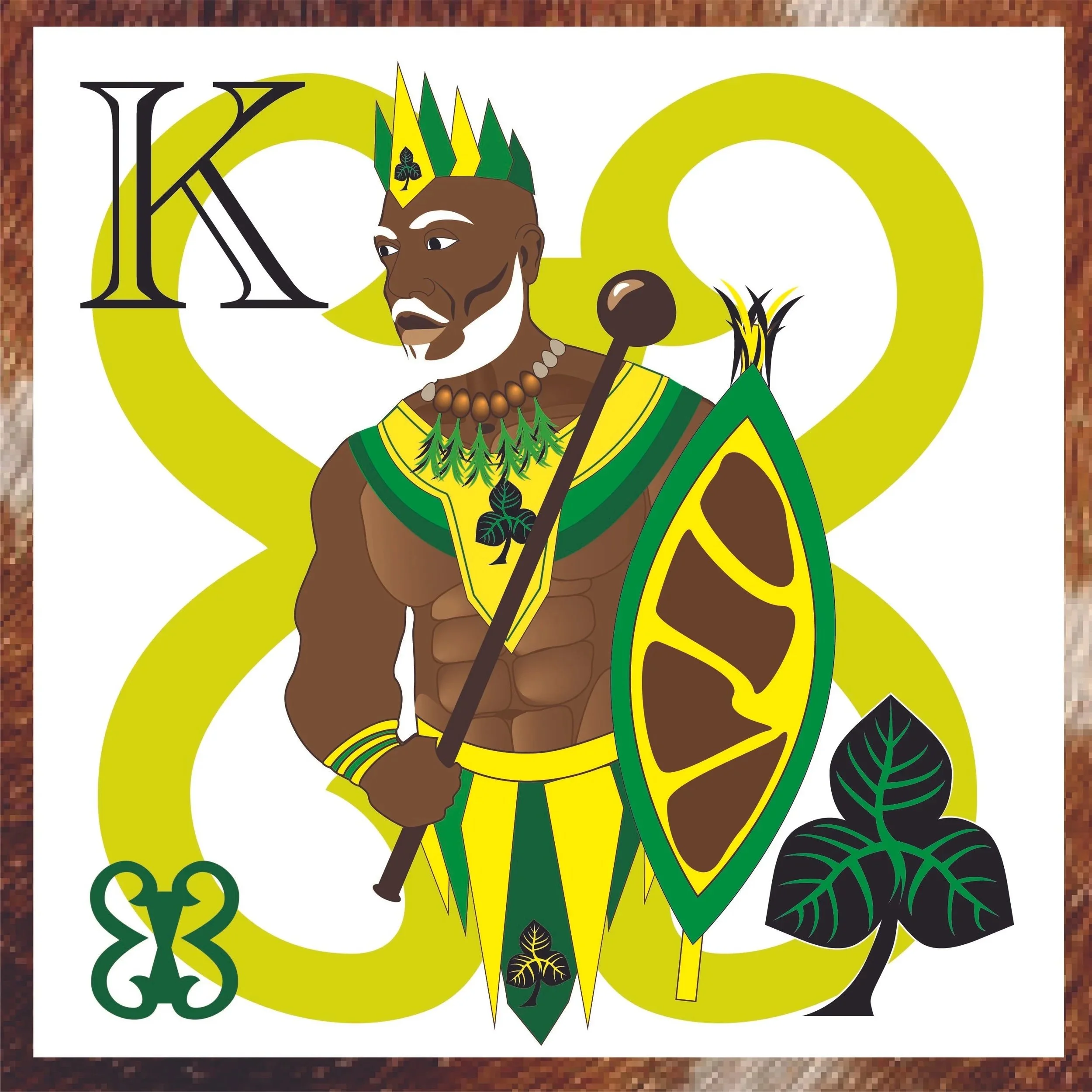
Osei Tutu: The Lion of the Ashanti
The King Who Forged a Nation from Gold and Fire
Osei Tutu: The Lion of the Ashanti
The King Who Forged a Nation from Gold and Fire
The drums begin before the dawn. Their rhythm rises through the mist — deep, ancient, alive. In the forest of Kwaman, the air is thick with incense and prophecy. Warriors stand in silence. Priests raise their hands to the heavens.
And from the smoke steps a man destined to bind a people with one heart, one voice, one destiny. Osei Kofi Tutu I. The King of Kings. The Founder of the Ashanti Empire. The man who turned scattered clans into a golden kingdom.
The Birth of a Vision
Before there was empire, there was division. Before there was glory, there was blood. In the late 17th century, the Akan lands were a mosaic of rival chiefdoms — proud, powerful, but fragmented. Each tribe guarded its gold, its gods, its pride. But the gods had chosen one man to unite them. Osei Tutu, born in Kwaman, heir of Oyoko royalty, carried both fire and foresight in his veins. Trained among warriors, tempered by exile, he learned early that unity was the sharpest weapon. He returned not as a prince, but as a flame — ready to set his people alight with purpose.
The Making of the Golden Throne
The legend begins beside the sacred Lake Bosomtwe. There, under the shadow of the gods, Osei Tutu and his priest, Okomfo Anokye, called upon the spirits of the ancestors.
Thunder split the sky. The wind roared like lions in the grass. And from the heavens descended the Golden Stool — Sika Dwa Kofi — glowing with divine fire, carried by a cloud of light.
It floated gently to the earth and settled upon Osei Tutu’s knees.
Anokye declared: “Behold! The soul of the Asante nation has descended!” That day, the clans of Denkyira, Kwaman, Bekwai, Kokofu, and Nsuta swore an oath — to be bound not by blood alone, but by spirit. They became one people, one kingdom — the Asante Union.
And the Golden Stool became more than a throne. It became a soul — the living heart of a nation.
The War of Freedom
But unity comes at a cost. The Denkyira, once masters of the Akan lands, demanded tribute. They saw the new Asante alliance as rebellion — and marched to crush it. What followed was fire and fury. Osei Tutu’s armies gathered — warriors painted in red clay, draped in kente that shimmered like molten flame. Drums thundered like the heartbeat of war. Spears caught the dawn. At Feyiase, the two forces met. The earth trembled beneath the clash. For hours, the jungle screamed with the sound of iron and death. And then — silence. When the dust cleared, Denkyira lay broken.
Osei Tutu had freed his people, not just from conquest, but from fear. In victory, he did not gloat. He simply stood, bathed in the light of a new dawn, and declared: “We are Asante — forged in war, bound by destiny.”
The Kingdom of Gold
From the ashes of battle rose the Asante Empire — a kingdom as radiant as the gold that flowed beneath its soil. Under Osei Tutu, cities blossomed: Kumasi, his capital, became the Golden City, a place of ceremony and splendor. There, palaces gleamed with brass and ivory. Courts thrummed with drums, debate, and divinity. Trade routes stretched from the forest to the coast, carrying gold, kola, and wisdom to distant lands. But Osei Tutu’s brilliance was not in wealth alone. He built laws, councils, and a system of governance that made unity endure beyond the man himself. At its heart lay the Golden Stool, guarded not as treasure, but as life itself.
The Fall and the Flame
Even kings born of light must meet their dusk. In battle by the River Pra, Osei Tutu fell — struck down by a Denkyira warrior’s arrow. As his men carried him away, legend says his final command was not for vengeance, but for unity. His body was mortal. But his spirit — unbreakable. They say the river turned gold that day. And that, beneath the canopy of the Ashanti forest, the soul of Osei Tutu rose into the air and joined the Stool that bore his name.
The Eternal King
Centuries have passed. Empires have risen and fallen. Yet in Ghana’s heart, the Asante Kingdom still stands — its festivals resplendent with color, its chiefs crowned in kente and gold.
The Golden Stool remains untouched by mortal hands. The spirit of unity it holds still beats — steady, luminous, eternal. And in every drumbeat, in every celebration, in every thread of kente that blazes under the sun,
Osei Tutu’s fire still burns. He is more than memory. He is the rhythm of a people. The pulse of a nation. The lion who sleeps in gold. The founder. The unifier. The flame that turned gold into destiny.
Osei Kofi Tutu I — The King of Clubs
The King of Clubs holds a Knobkerrie or Iwisa. The Adinkra symbol in the background is Steadfast (Pempamsie.)