

The Queen of Hearts
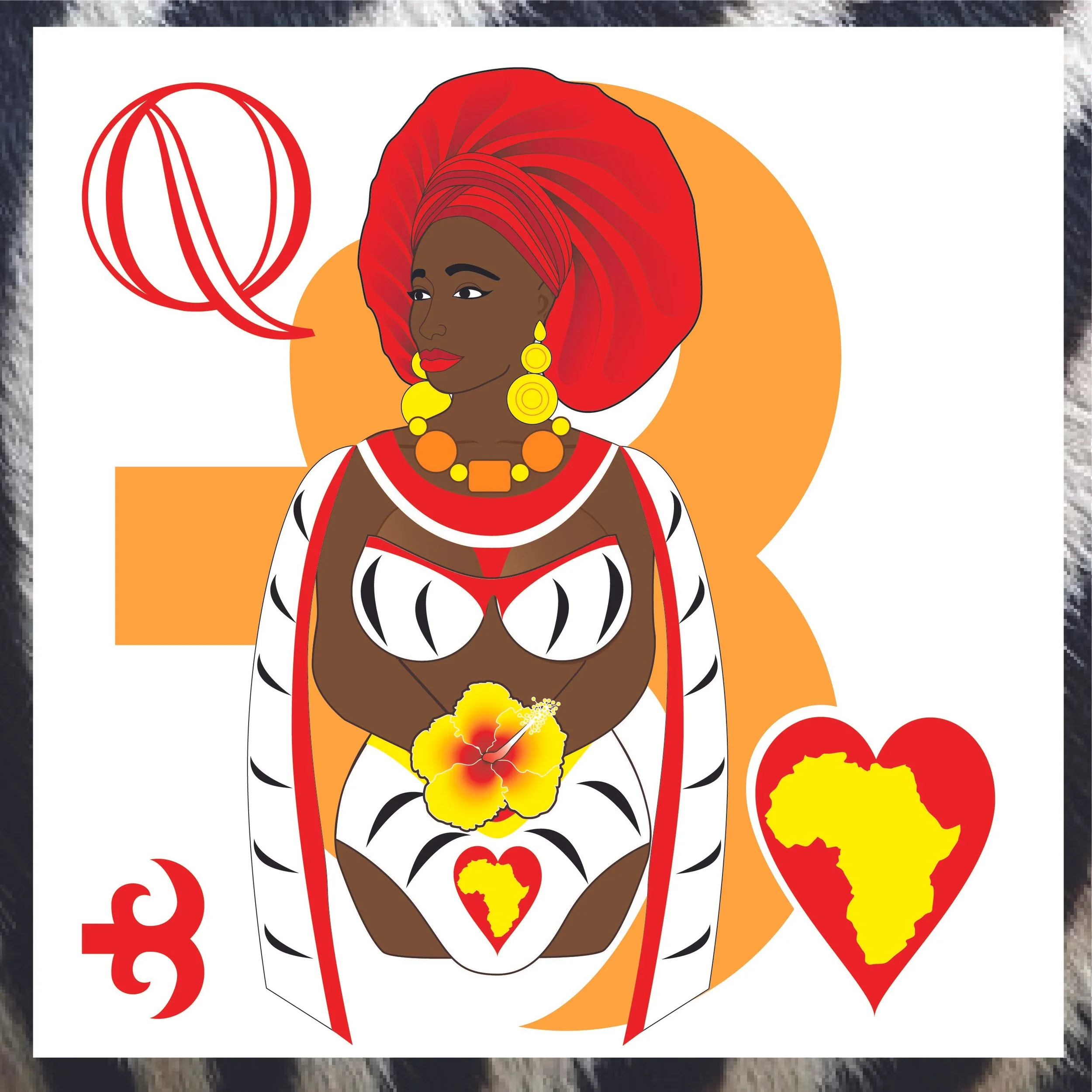
Queen Nandi
The Mother Who Forged a King
Queen Nandi: The Mother Who Forged a King
In the hills of KwaZulu-Natal, where mists roll over the valleys like spirits of the ancestors, one woman’s name still echoes — Nandi kaBhebhe, daughter of the Elangeni, mother of Shaka kaSenzangakhona, and the woman whose strength shaped a nation.
Before there was an empire, before the word “Zulu” struck fear and pride across southern Africa, there was Nandi — a mother who defied shame, exile, and war to raise a son who would become a legend.
Born of Chiefs, Bound for Struggle
Nandi was born around 1760 in Melmoth, among the Elangeni people. Her father, Chief Bhebhe, was a respected leader; her mother, Mfunda, a woman of wisdom and quiet power. Nandi’s name means “The Sweet One” — but her life would be anything but gentle.
When she was still young, Nandi caught the eye of Senzangakhona kaJama, heir to the Zulu throne. Their love defied custom, and when she conceived a child out of wedlock, scandal erupted. The Elangeni demanded justice — 55 head of cattle in compensation for the dishonor. Nandi herself stood before the council, proud and unyielding, and demanded that her child be recognized.
Her son, Shaka, was born into controversy — a boy marked by rejection, yet destined to command nations.
Exile and the Making of a Mother
Nandi’s life became a journey of survival. Her relationship with Senzangakhona soured, and she was forced to leave his kraal, returning to her people with young Shaka in her arms. But Elangeni was no refuge. Rumors and cruelty followed her.
So she fled again — across valleys and rivers, from one tribe to another — protecting her child from famine, disease, and enemies who saw them as outcasts. She lived among the Ncholo, then the Qwabe, and later the Mthethwa under the wise Chief Dingiswayo.
It was among the Mthethwa that Shaka, once the boy mocked as “illegitimate,” became a warrior. He joined the regiments, learned discipline, and began to shape the military genius that would one day transform southern Africa. And behind him, always, stood Nandi — guiding him with words sharper than any spear.
“Never forget who you are, my son,” she would say. “They may call you nothing, but you will make your name greater than theirs.”
Mother of the Zulu Nation
When Shaka rose to power, Nandi became more than a mother — she was Queen Mother, the spiritual heart of the new Zulu Kingdom. Her dignity and endurance became symbols of the nation itself.
Shaka’s love for his mother bordered on reverence. He honored her in life as few rulers have honored any woman — consulting her on matters of leadership, revering her as the living source of his authority. Together, they forged a new vision of unity and strength among the clans of the Zulu.
Yet even in greatness, Nandi carried the scars of her past — a woman who had walked through scorn and exile to stand beside a king.
Death and Devotion
In 1827, Nandi fell ill with dysentery. Her death at Eshowe devastated Shaka. The warrior who feared nothing could not face a world without his mother. His grief became legend — and, some say, madness.
It is said he decreed a year of mourning so severe that no crops were planted, no milk was drunk, and any woman who became pregnant was put to death. Cows were slaughtered so their calves could feel what it was to lose a mother.
While some historians argue that these accounts were exaggerated by colonial writers who sought to demonize Shaka, the depth of his mourning cannot be denied. For Shaka, Nandi was not only his mother — she was the soul of his people.
“You were the light of my life,” he is said to have cried. “How can the world go on when its sun has gone down?”
The Forgotten Grave
Queen Nandi was buried near Eshowe, her resting place unmarked and neglected for nearly two centuries. Yet her legacy refused to fade. Her bloodline continued through her children and their descendants; her spirit lived on in every story of Zulu pride and endurance.
In 2011, after years of advocacy by the Mhlongo and Bhebhe families, her grave was formally recognized. It now bears her true title:
“Princess Nandi Mhlongo — Mother of King Shaka.”
Plans continue to preserve her resting place as a national heritage site — a long-overdue tribute to the woman who endured humiliation, exile, and danger to raise a child who would change Africa forever.
Legacy of a Lioness
To remember Nandi is to remember every mother who defied the odds. She is the quiet force behind a nation’s rise, the heart behind the legend of Shaka. Her courage speaks across generations — from the kraals of Elangeni to the royal tombs of KwaZulu-Natal.
She was not a queen by crown, but by will. She was the woman who taught a boy to become a king — and through him, became eternal.
Queen Nandi kaBhebhe Mhlongo
The mother who forged a warrior. The woman who gave birth to a nation.
The Queen of Hearts holds a Wild Hibiscus. The Adinkra symbol in the background is Nurturing (Akoko Nan.)